
Reading books is my way of escaping into other worlds and living other lives. It is extraordinary and highly recommended if you haven’t tried it yet. I am quite old-fashioned when it comes to reading and I need to feel the spine of the book in my hand and the wind on my face when I turn a page. Books to me are my loyal companions who I turn to when I am pretty much done with the world around me. I haven’t graduated to e-books yet because I feel it will reduce my love for my faithful companions. I consider buying books as an investment and nothing can stop me from entering a book store, if it happens to be in sight.
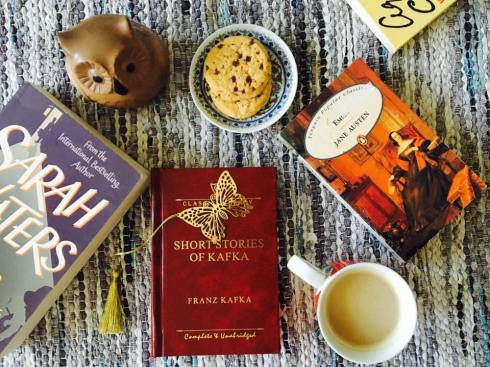
Last year, for the GoodReads challenge I took up the gargantuan task of completing 60 books in 365 days! Obviously, I failed. I over estimated my capacity to read and the amount of time I had on my hands to complete the challenge. I managed to read 20 good books. Therefore, I do not feel like a failure. Failing, yet not feeling like a failure is success.
Last year which was just 3 days ago, I read enormously delightful books like The Illicit Happiness of other people by Manu Joseph, Bone clocks my David Mitchell, The Signature of all things by Elizabeth Gilbert, The moveable feast by Ernest Hemmingway, The Secret Garden by Fraces Burnett, After Dark by Murakami, Sophie Kinsella, Maya Angelou and some new authors like Jasmine Warga. These books were enriching, enjoyable but demanded a lot of time.
I also wasted plenty of time deciding which book to read. Indecisiveness is a time waster. There were many that I took up and didn’t go back to like Ian McEwan’s The Children Act, JK Rowling’s Casual Vacancy ( I tried several times but it is way too boring) and The Twentieth Wife by Indu Sundaresan.
This year, however, I am tad more realistic and decided to do 2 books per month which makes it 24 books in 2o16. I am making a list in advance so that I am more focused. Here we go-
- Rosamund Pilcher’s “Shell Seekers” – I am re-reading this book that I read 9 years back in Cambridge, England. I borrowed it from the local library and I remember not stepping out of my room, the entire weekend. I finished the book the 581 pager book in nearly 2.5 days. I found this book again from a book etailer’s shop and ordered it immediately. I realized I have forgotten some parts of this lovely family saga and this seemed like a perfect excuse to indulge into Ms. Pilcher’s comforting writing.

2. “The Elegance of a Hedgehog” by Muriel Barbery

I picked this book on impulse and I started it last year. I enjoyed the bizarre plot based on the life events of a French concierge who is intellectually superior but is forced to conceal it because of the class -conscious society that she lives in. I do not recollect why I dropped the book but I intend to finish it as soon as possible.
3. “Emma” by Jane Austen
I believe to survive the ugliness of the world that we live in, it is important to go back to classics to restore the peace, beauty and balance in our life. Jane Austen’s works always succeed with me. I am planning to read Emma again.

4. Akhil Sharma’s “Family Life”
This is a Folio Prize winner that made it to the top 10 on the New York Times best -seller list. It is dark and humourous, I have heard and that is just kind of book I am aching to read this year.

5. Ruth Reichl’s “Delicious”
I love Ruth Reichl. Her Garlic and Sapphires was hilarious and insightful. But “Delicous” happens to be the America’s favourite Food writer and restaurant critic’s first fiction -writing attempt. I have heard rave reviews about it and a food book is a compulsory read for me. Obviously.

6. Rachel Joyce’s “Unlikely pilgrimage of Harold Fry”
I friend I met on one of my travels recommended this book and that is how I got this book. All I know about the book is that it is a story with a savage twist. 
I think this is going to be a 4-part series where I am going to discuss the book that will make it the list for 2016. I will also try and do a review but I won’t promise because I do short reviews of the books I read on my instagram ( @sliceofmylyfe) and Goodreads account.
Have a fab New Year everyone and happy reading.

































 Sliceofmylyfe - a Food blog based in Bahrain